

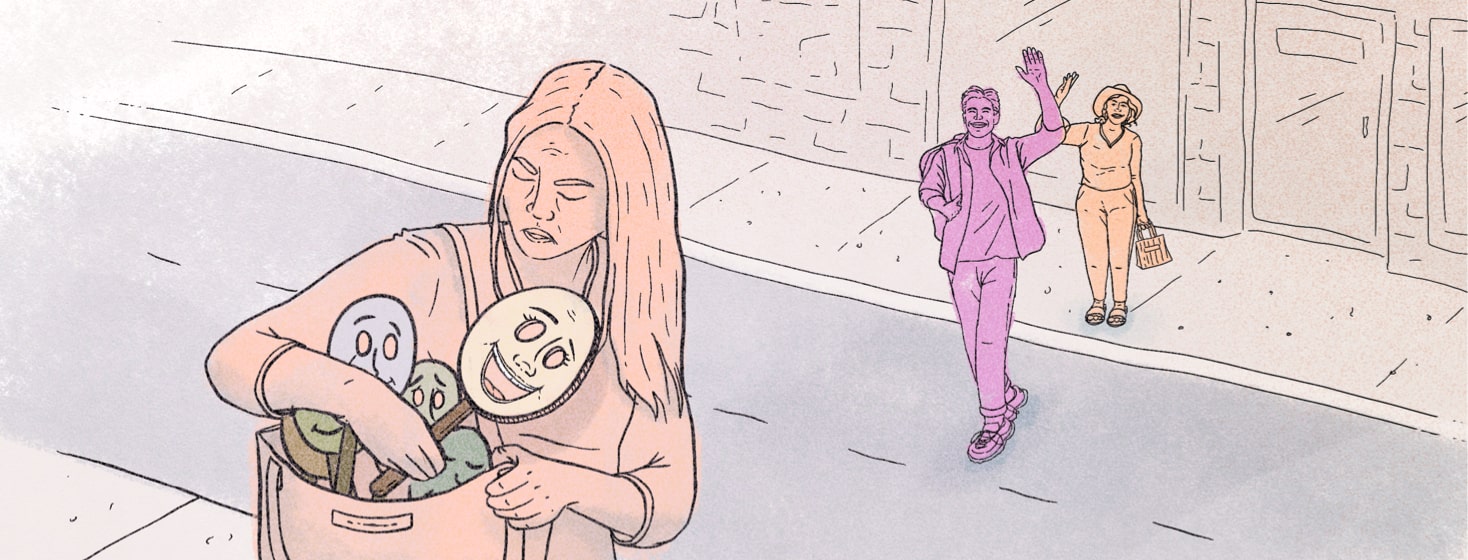
Masking IgAN Symptoms

Until recently, I thought of masking mainly in relation to neurodivergent people - hiding parts of themselves or adapting their behavior to fit social expectations.
Through my own experience, I have come to understand that masking can also happen with illness, especially chronic disease. In my case, it was not obvious at first because I felt energetic and well for many years after my diagnosis.
You don’t look sick: what people say to people with IgAN
Although I told friends and family about my IgAN diagnosis, I rarely shared the details—my prognosis, my numbers, or, most importantly, how I actually felt. When I eventually spoke more freely about my journey, people were often surprised by the stage of my IgAN, and a common reaction was, “Oh, but you don’t look sick.” Hearing that repeatedly shaped how I viewed my illness, and how I thought I was supposed to behave.

If I didn’t look sick, I felt I should not act sick either, so I kept pushing through. More than anything else, those words affected me deeply. I know they were usually meant kindly, but for me, they made the mental burden of the disease much harder to carry.
What masking my IgA-nephropathy looked like for me
As my kidney function declined, fatigue began to set in earlier in the day, and low energy became harder to ignore.
Other people did not understand why I was tired or why I no longer wanted late nights out.
Simply saying, “I’m tired,” did not seem enough—especially because I did not look tired, and they knew the "other" Ruchi.
As a result, I kept joining social activities even when I needed rest.
The same happened at home: I continued cooking, cleaning, errands, and doing everything I had always done. I could have spoken up, but I did not, because I felt guilty.
I felt guilty for resting and guilty for saying no. I do not blame anyone for that—I could have been more honest about how I was feeling.
But guilt kept overriding my needs, so I hid what was really going on and put on a cheerful face to seem social and capable. I wanted to meet the expectations I felt others had of me. The alternative, I feared, was being seen as lazy—or worse.
Removing my mask
A few years ago, I started speaking much more openly on social media about my diagnosis and how it affects me, and this honesty and transparency changed things. Friends told me they had not realized what daily life was really like for me.
My brother said he had never understood that when I said I was tired, I meant extreme fatigue.
I started feeling less guilty about needing to cancel plans at the last minute when my energy was too low.
Over time, I became more intentional about how I used my energy, knowing I only had so much to give each day, and work took a good chunk of that energy. As I became more open about my symptoms, my friends and family grew more supportive, and little by little, I began to let the mask fall away.
I’m okay coping with IgAN
I wish I had done this sooner—shared more honestly what I was living with and how it affected me. But I am still learning.
The other day, a neighbor asked, “How are you?” and I gave my usual answer: “I’m okay, how are you?”
She replied, “You always say that. You always say you’re okay. How are you really?”
Maybe one day I will give a different, more honest answer. Until then, I am proud of the progress I have made thus far in removing my mask.
Join the conversation